Copper Roof Installation, Replacement and Repair in Cedar Park, TX
Round Rock Copper Roofing helps you plan copper roof installation, replacement and repair in Cedar Park, TX, including standing seam roofs, porch coverings, bay-window roofs and flashing. Start by separating the roof covering from the structure beneath it. Replacing copper on a sound existing roof is a different project from building a new porch or changing the shape of an entrance canopy.
That distinction affects the questions to ask before requesting prices. A covering-only proposal needs a suitable deck and coordinated roof details; a new feature also needs its construction designed and agreed. Decide which parts of the building will remain, then compare copper systems that suit the actual shape, slope and connections rather than selecting a material before the scope is clear.
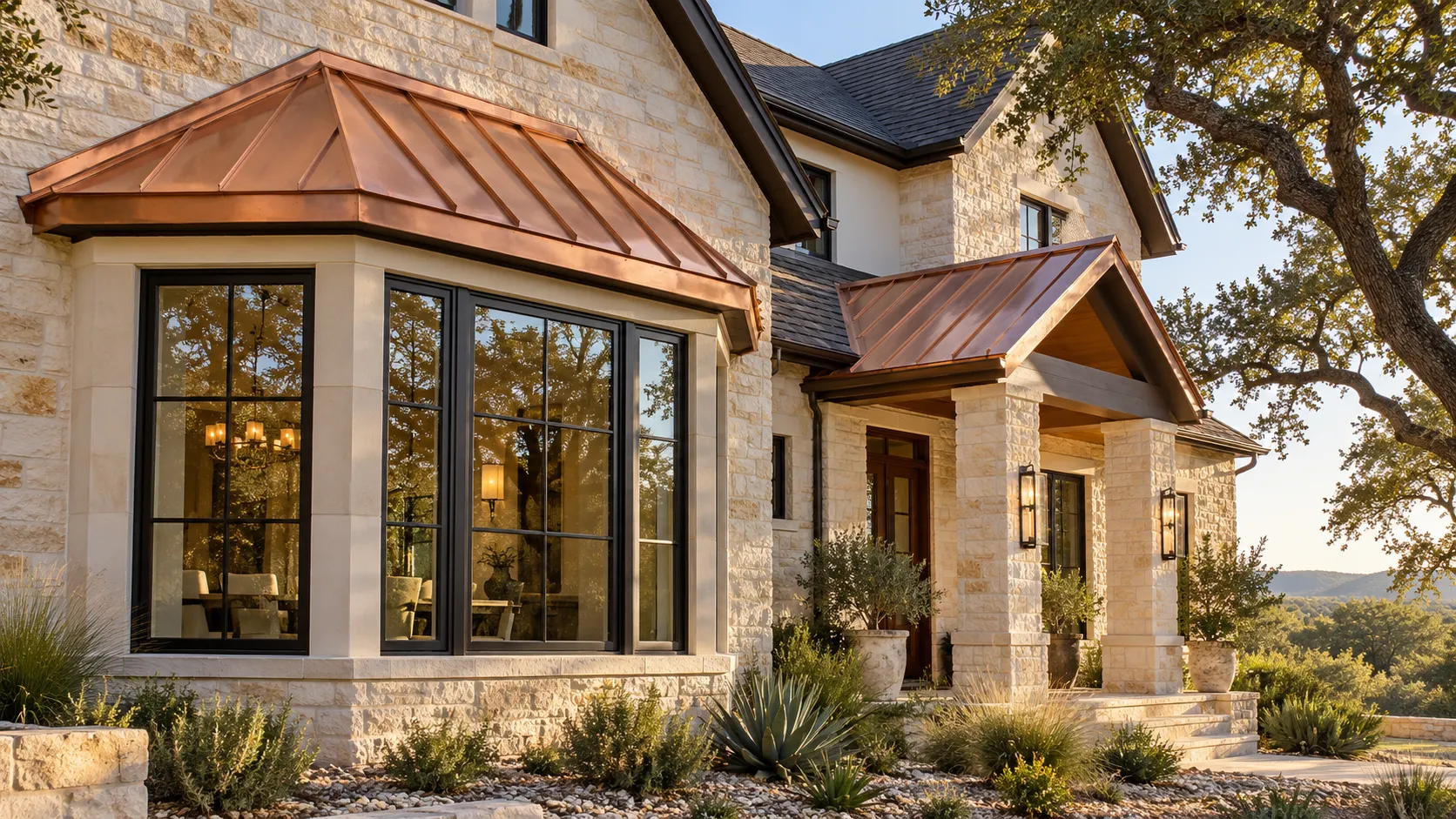
Copper roofing scopes in Cedar Park
Full roofs and replacement scopes
For a full roof, ask the contractor to define both the copper system and the condition it will be installed over. Standing seam panels need a layout suited to the roof planes and their intersections. Valleys, ridges, penetrations and the connection to walls should be part of the proposal, not treated as minor additions after the main material is priced.
When replacing an existing covering, include removal and examination of the exposed deck. Agree how repairs will be documented if that work reveals conditions that could not be seen at the estimate stage. Our Standing Seam Copper Roofing guide explains the system in more detail. A proposal that changes framing, roof shape or another structural element needs to identify that work separately; calling the whole project a reroof should not hide a larger construction scope within the material allowance.
Porch, entry and bay-window roofs
An existing porch roof may offer a limited area for introducing copper, provided the underlying assembly suits it. Show the roof's connection to the house, the finished lower edge and any adjoining covering in the brief. Because an entrance roof is seen from below as well as from the street, ask which visible edges and underside work are included.
If the porch or canopy itself is new, establish its structure and geometry before choosing the copper details. The same applies to a bay-window projection: a new feature and a covering replacement do not have the same design scope. Ask who is responsible for those different parts and how their work meets at the roof-to-wall junction. A small copper roof can remain a focused project, but only when the boundaries between structure, covering and adjacent finishes are explicit.
Curved roofs and flat-seam details
Curved roofs need more than a curved outline in the design. Their pitch changes across the surface, which affects drainage and the choice of seam arrangement. A flat-seam copper system is another option for suitable roof forms, with pan layout and joining details that differ from a simple raised standing seam.
For a new Cedar Park entrance feature, include enough drawing information to describe the roof from the side and where it meets the building. The installer can then assess the intended geometry rather than infer it from a style photograph. Ask how seams will be laid out and how the edge detail relates to the rest of the canopy. Resolve those questions before fabrication, and keep any change in the supporting construction visible in the scope rather than treating it as part of the decorative metalwork.
Leak repair, flashing and transitions
If a copper covering is already in place, investigate the leak or defect before deciding how much to replace. A problem at flashing, a seam or an adjoining roof material may have a different repair boundary from damage across a whole roof plane. Describe when the leak appears and any previous work, then ask the assessment to identify the likely failed components.
The repair proposal should show what remains and what needs to be removed for access. Include reinstatement at the wall or adjacent roof, as well as the new copper itself. If investigation reveals a problem with the underlying construction, have that added as an explicit scope decision. A surface repair should not be expected to correct an unresolved structural or backing defect, and a new covering should not be used to avoid explaining why the old detail failed.
Separate the finish from the structural project
Cedar Park's current permit guidance lists nonstructural roof covering among projects that do not require a permit. It separately identifies new construction, additions and other work that physically changes or adds structures as work that may require one. That distinction is useful when planning copper, but the city also says its lists are not comprehensive and asks owners to confirm the requirements before work starts.
Describe the project accurately when contacting Building Inspections. Replacing a roof covering on the same structure is not the same as constructing a new porch, changing framing or creating a different roof shape. If the proposal includes more than the covering, identify those changes rather than applying the nonstructural-covering statement to the entire job.
The same clarity helps compare contractor estimates. Ask which part covers the copper and roof details, which part concerns the underlying construction and who is responsible for any required approvals. If removal reveals work outside the agreed scope, confirm its effect on the plan before proceeding. The permit distinction does not itself establish that an existing roof is suitable for copper; the chosen assembly still needs assessment and appropriate design for the actual building.
Compare complete copper roof proposals
Seams, weathering and compatible details
Specify actual copper rather than a copper-colored finish, and identify the seam system proposed for each roof area. A standing seam roof, flat-seam feature and shaped bay cap can use the same metal while needing different fabrication and connection details. Their suitability follows the geometry and water path of each surface.
Copper also moves with temperature changes. The Copper Development Association's guidance addresses movement and fastening arrangements, particularly along longer runs. Ask how the selected assembly accommodates that movement and connects to adjacent materials. New copper will weather, so compare its initial appearance with nearby finishes while recognizing that its patina will develop over time. There is no single timetable that guarantees a particular color. Keep flashing materials and runoff relationships in the specification rather than assuming all surrounding metals or stone surfaces are interchangeable.
For a covering replacement, look for removal, assessment of the deck, copper and associated roof details, plus a process for authorizing concealed repairs. For a new canopy or porch, request a separate description of the construction it depends on. The two scopes may be coordinated by one contractor, but they should still be understandable in the proposal.
Include access, protection of adjoining surfaces and the handling of exposed areas during work in the discussion. Ask who supplies drawings and who keeps them aligned with any approved changes. At completion, retain the material identification, final scope and care guidance. These records make it easier to explain the roof when a later inspection or repair is needed than a receipt that simply says copper installation.
For another property where a copper conversion changes a historic exterior, Copper Roof Installation, Replacement and Repair in Hutto discusses material changes and the Old Town review context.
Frequently asked questions
Does every project in Cedar Park need the same approval?
No. Cedar Park lists nonstructural roof covering as work that does not require a permit, but a new structure, addition or structural change is a different scope. The city's lists are not exhaustive. Confirm the actual address and proposed work with staff before applying that exemption, especially if the project includes more than replacing the covering on an existing roof.
Can I keep the existing copper while repairing a leak?
It may be possible if the existing copper is serviceable and the failed component can be repaired with a suitable detail. Have the roof, flashing and adjoining materials assessed together. Ask the contractor to identify the repair boundary and any access work. If a problem extends into the deck or structure, that should be explained separately rather than hidden inside a patching allowance.
What should I include in a copper roofing inquiry?
Prepare the Cedar Park address and say whether the roof already exists, is being altered or forms part of a new structure. Include safe photographs, the existing covering and any known leaks or previous repairs. Drawings help with a proposed porch or canopy. Describe the intended copper finish and confirm contractor availability for the location before arranging the next step.
Plan your Cedar Park project
Prepare your Cedar Park copper roofing request below. Include the intended roof area and whether the work changes only the covering or also the construction beneath it. That distinction helps keep material selection, assessment and any approval questions tied to the same project. Phone coming soon.