Copper Roof Installation, Replacement and Repair in Georgetown, TX
Round Rock Copper Roofing helps you plan copper roof installation, replacement and repair in Georgetown, TX, including standing seam roofs, flashing and smaller porch, bay-window or dormer features. For an existing copper roof, the first decision is what can be retained. For new work, the seams, roof shape and connections should be specified together so the proposal describes a complete roof assembly.
An older copper surface can remain visually important even when one junction needs attention. Before choosing a full replacement, distinguish the condition of the copper from problems at flashings, seams or adjoining materials. On a historically reviewed Georgetown property, that assessment also helps explain the intended change: which details remain, which are renewed and how the new work will relate to the existing roof.
Copper roofing scopes in Georgetown
Full roofs and replacement scopes
A replacement proposal should explain why renewal is recommended and identify its boundaries. One roof plane, a group of intersecting slopes and the entire roof are different scopes. Ask what the assessment found in the copper, attachments, deck and associated details, and whether retaining any sound areas is practical.
Where a complete new system is appropriate, compare the seam layout as well as the material. The pattern should work with the roof's geometry and its ridges, valleys, penetrations and wall connections. Our Standing Seam Copper Roofing guide gives further context for raised-seam roofs. Include removal and examination of the exposed deck in replacement estimates, along with a clear process for concealed repairs. A decision to preserve the appearance of an older roof should still result in a workable specification for the construction beneath the copper.
Porch, entry and bay-window roofs
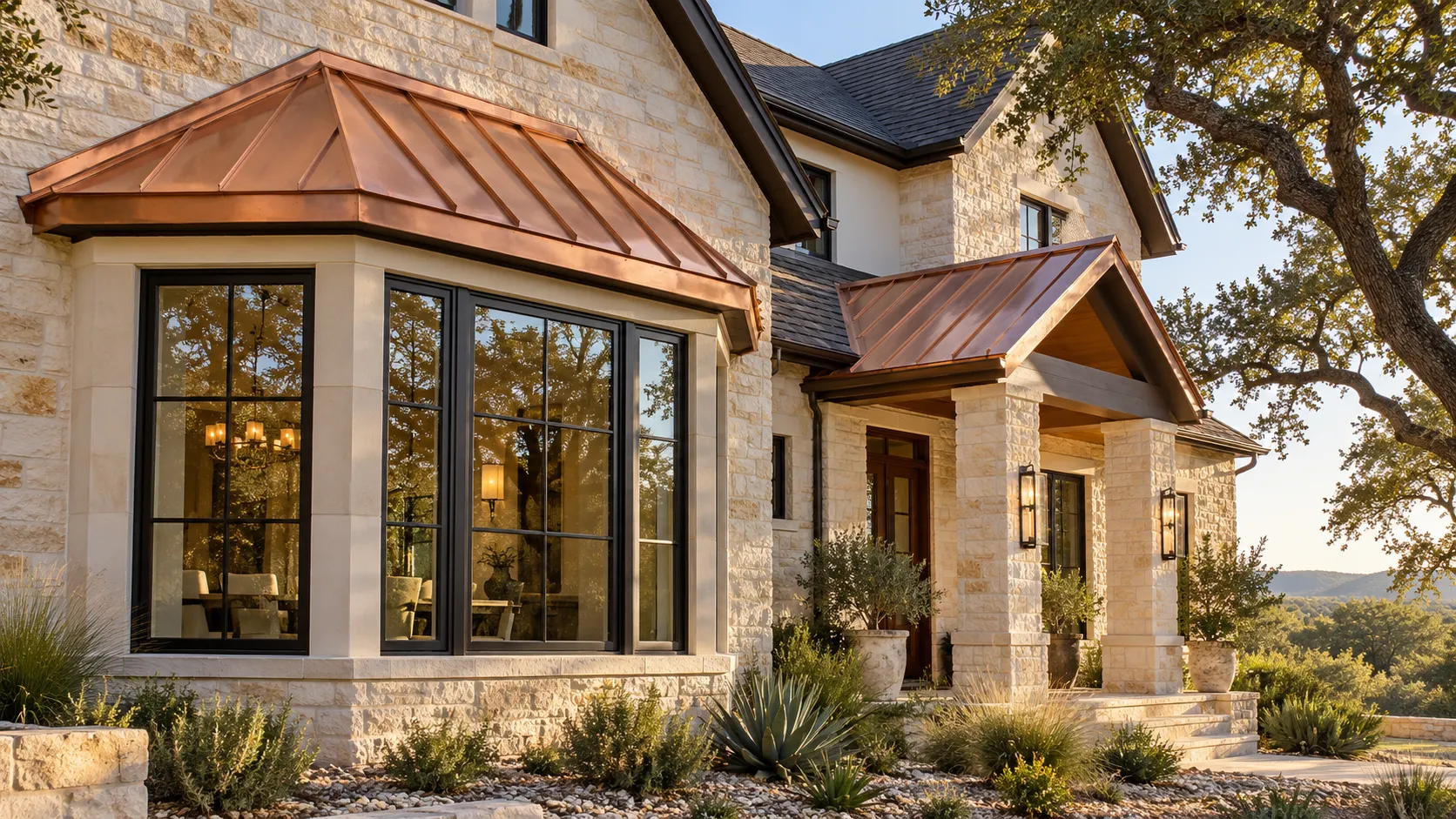
On a porch, bay window or dormer, a small change in seam spacing or edge shape can be conspicuous. Photograph the feature from the street and closer to the building before discussing renewal. If it is part of an older exterior, decide which visible details are important to retain and which need correction.
The new copper may initially differ in color from weathered material nearby. Discuss that contrast before approving the repair or replacement boundary rather than expecting an immediate invisible match. Ask how the roof meets the wall above, how water reaches the lower edge and which adjoining finishes need to be disturbed. A copper accent can be renewed without automatically replacing the main roof, but its connection to that roof or the building still needs to be assessed as part of the same detail.
Curved roofs and flat-seam details
When an existing curved feature is being repaired or reproduced, preserve information about its shape before material is removed. Overall dimensions, the curve seen from the side and the arrangement of visible seams help define what the replacement is intended to match. They also give the installer a basis for evaluating the proposed roof system.
Standing seam copper can be formed for suitable curved roofs, while flat-seam pans provide another arrangement for appropriate geometries. Changing pitch and drainage conditions influence the details; the name of the seam is not enough to establish suitability. Ask the designer or installer to explain the proposed layout, junctions and attachment. For a historic-review application, include the visible profile as well as the material description so the review and fabrication brief refer to the same intended result.
Leak repair, flashing and transitions
A localized leak is a reason for a focused investigation, not an automatic verdict on the entire copper covering. The affected detail may be a wall junction, chimney flashing, valley or penetration. Its assessment should include the adjacent roof components and the way water reaches and leaves that connection.
Ask for the repair boundary to be shown clearly. The quote should state which copper remains, what must be lifted or removed to gain access and which associated materials are renewed. If a repair would join new copper to an older section, discuss the appearance and the method of making that connection. Keep maintenance, a targeted repair and larger replacement distinct in the proposal. That makes it easier to understand whether the recommended work addresses a documented defect or includes a broader change in the roof's design.
Existing materials and Georgetown historic review
Georgetown reviews work within its historic overlay districts through Historic Planning and the Certificate of Appropriateness process. Depending on the proposal, review may involve the Historic Preservation Officer or the Historic and Architectural Review Commission. Check the property's status and the intended roof work before committing to a change in material, profile or appearance. An old building is not automatically subject to the same process as every other old building.
The city's historic design-guideline appendix treats roof maintenance as attention to both the covering and associated details, including flashing and connections. It also discusses in-kind replacement in relation to existing color, texture, size and profile. For an actual copper project, use that as a reason to record the existing roof carefully and ask which characteristics the proposed work needs to retain.
A useful application or project brief distinguishes sound copper from failed components and shows the visible result after repairs. Photographs and drawings can explain a seam layout or changed edge more clearly than the phrase copper roof replacement. The city's review determines applicability and acceptance; a contractor's claim that a copper detail looks historic does not establish approval. Separate any required building review from the preservation discussion and keep the final scope aligned with both.
Compare complete copper roof proposals
Seams, weathering and compatible details
Compare the actual proposed copper with the existing roof, but do not expect a new sample to reproduce years of weathering. Patina develops according to exposure and conditions, and adjacent surfaces may not change identically. Discuss how the repair boundary will look at completion as well as the fact that the new material will continue to weather.
The assembly also needs to accommodate movement. Copper Development Association guidance addresses attachment and thermal movement, particularly for longer pans and seam runs. Ask how the chosen design deals with those conditions and how new sections connect to retained details. Other metals, adjacent finishes and runoff paths should be considered when specifying flashing and transitions. Matching the visible seam pattern is useful, but it is only one part of creating a compatible and functional roof detail.
For repair proposals, compare the identified defect and access requirements before comparing totals. A small visible area can involve removing adjacent material to reach the failed connection. Ask what the quote includes for reinstatement and whether any retained parts are expected to need separate work.
For replacement, record the roof area, copper system, flashing scope and any existing features to be preserved. Agree how concealed deck damage or a necessary design change will be documented and approved. Include access arrangements and temporary protection during the work in the contractor discussion. At handover, retain the drawings, material identification and work record with any property-review documents so future maintenance starts from the roof that was actually installed.
For a separate project that may include a new porch structure, Copper Roof Installation, Replacement and Repair in Cedar Park explains the distinction between replacing a covering and changing the construction beneath it.
Frequently asked questions
Does every project in Georgetown need the same approval?
No. Historic review depends on the property's status and the proposed work, while the construction scope may raise separate building questions. Georgetown's Historic Planning staff can explain the Certificate of Appropriateness process for an affected address. Describe what will be retained and what changes in material, seams or profile are proposed. Neither the age of the roof nor the use of copper alone settles the approval.
Can I keep the existing copper while repairing a leak?
Sometimes. An assessment may identify a failed flashing or connection beside copper that remains serviceable. Ask the contractor to explain the condition and show the proposed repair boundary, including access and reinstatement. Retention should be based on the roof's actual condition and workable details, not solely on avoiding a color difference between old and new copper.
What should I include in a copper roofing inquiry?
Include the Georgetown address, safe photographs of the roof and its visible details, and any known leak history. Add previous work records, material information or historic-review documents if available. Explain whether you want to retain the existing appearance, change the material or add a feature. Confirm contractor coverage before arranging an assessment; photographs help describe the request but do not replace inspection.
Plan your Georgetown project
Prepare your Georgetown copper roof request below. Describe the areas you hope to retain and the problem or change being considered. Existing photographs and roof records can help the next discussion distinguish maintenance, targeted repair and a larger replacement scope. Phone coming soon.