Copper Roof Installation, Replacement and Repair in Hutto, TX
Round Rock Copper Roofing helps you plan copper roof installation, replacement and repair in Hutto, TX, from full standing seam roofs to porch, bay-window and dormer accents. The right scope brings the copper, seams, backing and flashing together. A small roof feature can introduce the material without replacing the main roof, while an existing copper roof may need targeted work rather than a complete renewal.
Start with the change you want to make. Are you replacing worn copper, converting another covering to copper or building a new roof feature? Those choices involve different preparation and design questions. For a property affected by Hutto's Old Town review, the change in material and visible appearance also belongs in the discussion before the roof is ordered or fabricated.
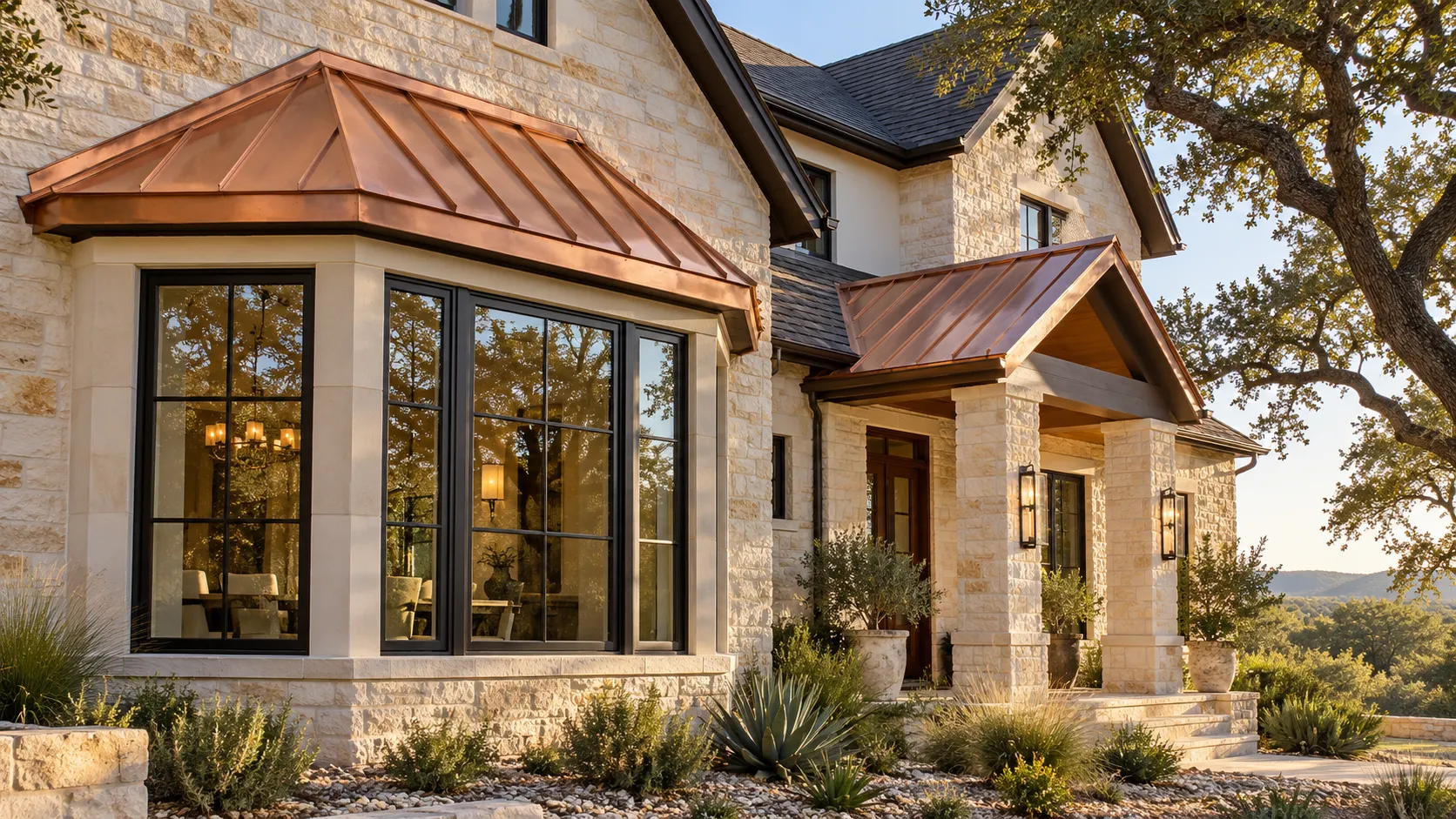
Copper roofing scopes in Hutto
Full roofs and replacement scopes
A full copper roof needs a plan for the whole assembly, not just a quantity of sheet metal. The roof's shape and slope influence seam selection, and intersecting planes create valleys, ridges and wall connections that must be resolved together. Ask for the proposed panel layout and the treatment of penetrations to be shown alongside the material specification.
For replacement work, identify the covering being removed and how the deck will be examined. Separate any uncertain concealed repairs from the known installation scope, with a method for documenting and approving them. Our Standing Seam Copper Roofing guide explains the raised-seam approach in more detail. A new copper covering does not establish that the existing roof is ready to receive it; the contractor needs to assess the supporting construction and select an appropriate complete system.
Porch, entry and bay-window roofs
A copper porch or bay-window roof can be a contained project with a strong visual effect. Because the feature is often seen at close range, its edges, corners and seam arrangement deserve a clear drawing. Decide whether the copper should become the focal point of the entrance or relate quietly to other roof elements.
The connection to the house is as important as the outline of the new roof. Ask how the upper junction, adjoining wall finish and lower edge will be detailed. If an existing accent covering is being replaced, identify what stays beneath it and whether the feature's shape changes. A new canopy is a different construction scope from renewing the covering of a sound existing porch. For an Old Town property, describe those differences accurately when checking any applicable review rather than grouping everything under roof repair.
Curved roofs and flat-seam details
Curved entrance roofs and rounded dormers need a seam arrangement that follows their geometry. The pitch changes around the curve, so a detail suitable at the steeper edge may not be appropriate elsewhere. A flat-seam pattern uses a different arrangement of copper pans from a straightforward standing seam roof; the choice should follow the roof's form and drainage needs.
For a proposed Hutto accent, include a side view as well as a front elevation in the brief. That helps the designer and installer understand the curve and its junction with the building. Ask where seams will fall and how the visible edge is finished. These are fabrication decisions to resolve for the actual roof, not decorative options that can be selected independently of its construction. No single reference photograph establishes the correct details for every curved feature.
Leak repair, flashing and transitions
When an existing copper roof leaks, describe the symptoms before deciding the repair. A stain indoors may relate to a seam, wall junction, penetration or adjacent roofing detail, and its position alone does not identify the entry point. An assessment should establish what has failed and what can remain serviceable.
Ask a repair proposal to identify the affected copper and associated flashing, plus any surrounding material that must be lifted to reach the connection. New copper may look different from the weathered surface around it, so discuss both the repair boundary and the appearance of the finished work. If other roof materials meet the copper, their compatibility and water path belong in the same scope. Do not assume a surface coating or a general roofing patch is an appropriate substitute for repairing the actual detail.
Material changes and Old Town project scope
Hutto's Historic Preservation guidance addresses new construction visible from the public street in Old Town and exterior changes to contributing structures. It distinguishes those changes from ordinary maintenance that leaves material, configuration, dimensions and outward appearance unchanged. Replacing a different covering with copper should therefore be described as a material change, even when the footprint of a porch or bay roof stays the same.
Before committing to fabrication, ask Planning staff whether the property's status and the proposed change require a Certificate of Appropriateness. Provide photographs, the roof shape and the intended material or finish. If the roof is new, make that clear; if existing copper is being repaired, show which portions are being retained. These facts are more useful than a broad label such as traditional metal roof.
A preservation approval does not replace a separate building-permit requirement. Keep the approved design and the contractor's scope consistent, and discuss relevant changes with staff before substituting a different detail. Copper's appearance also develops over time, so the shiny new sample should not be presented as a permanent color. Historic review is property-specific; this guidance does not imply every Hutto roof is within Old Town or that copper is automatically approved there.
Compare complete copper roof proposals
Seams, weathering and compatible details
Ask the proposal to identify actual copper, the roof system and the associated flashing materials. Copper-colored roofing is not the same material. Standing seams, flat-seam pans and shaped details have different uses, and the roof's geometry should guide the selection rather than a preference for a pattern alone.
Copper changes appearance as it weathers. New work can contrast with an older section, and a sample cannot promise a particular patina by a fixed date. Also ask how the assembly accommodates thermal movement. The Copper Development Association's guidance treats movement and attachment as part of copper roof design, especially along longer runs. Connections to other materials and the path of runoff should be considered together. These are questions for the specified assembly; they should not be replaced by a general assurance that metal roofing needs no attention.
Compare proposals that describe the same roof area and purpose. Separate removal, deck assessment, any repair allowance, copper installation and flashing. For a compact accent, include the junction with the house and the finished underside or edges where those are part of the work. Identify any construction by another trade before assuming it is included.
Ask who handles property-specific approvals and how access will be arranged without damaging the surrounding building. If unknown conditions appear during removal, agree how they will be recorded and authorized. Keep the material identification, drawings and care guidance at completion. Those records help a future contractor understand the installed roof and its details instead of relying only on photographs of the finished copper.
For another property where retaining older copper is the main concern, Copper Roof Installation, Replacement and Repair in Georgetown discusses repair boundaries, matching details and historic-property review.
Frequently asked questions
Does every project in Hutto need the same approval?
No. Hutto's Old Town guidance distinguishes visible new construction and changes to contributing structures from in-kind maintenance. A new copper canopy, a material conversion and a repair that preserves existing copper should be described separately. Ask city staff about the address and full scope, including any structural changes. Do not assume a preservation decision also settles building-permit requirements.
Can I keep the existing copper while repairing a leak?
It may be possible, depending on the condition of the copper and the cause of the leak. Have the seams, flashing and adjoining roof components assessed before agreeing to broad replacement. A written repair scope should explain which areas remain, what must be removed for access and how the repaired junction will work. The visible stain alone cannot establish that boundary.
What should I include in a copper roofing inquiry?
Include the Hutto address, photographs taken safely from the ground and whether the project is a new roof, replacement or repair. Identify the existing covering if known and describe any leak symptoms or previous work. For a porch or bay feature, include a view of its connection to the house. Add known review information and confirm installer availability for the property.
Plan your Hutto project
Prepare your Hutto copper roofing request below. Include the roof feature, existing material and intended change so the discussion can focus on the right system and scope. For a reviewed property, add any drawings or decisions already available. Phone coming soon.